
Japanese Knotweed Disputes: don’t get in a knot this year
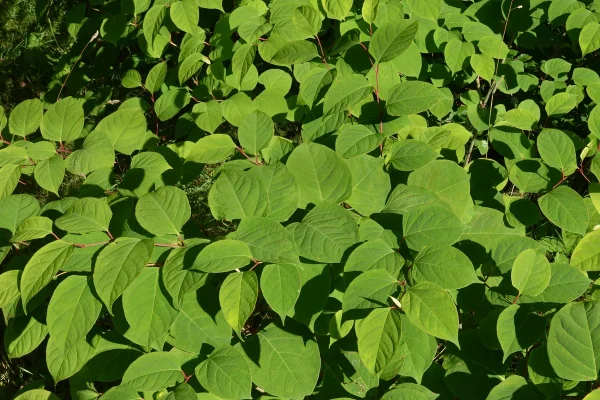
Japanese knotweed was introduced to the UK from Japan in 1825 as an ornamental plant – but ornamental plant it is no more. Its bamboo-like stems can grow to over seven feet tall in early summer, with shovel-shaped leaves, creamy white flower tassels, and a vast underground rhizome network that suppresses surrounding growth.
The plant is now widely recognised as one of the UK’s most invasive species. It can grow rapidly during warmer months and spread beneath patios, pathways, walls, drains, and hard landscaping. In some cases, it can exploit existing weaknesses in concrete or tarmac, leading to costly repair work and significant disruption for homeowners.
Why Japanese Knotweed Causes Property Disputes
Japanese knotweed is not simply a gardening issue. It can create legal, financial, and practical problems for buyers, sellers, landlords, developers, and neighbouring property owners.
In a conveyancing transaction, a seller is asked a standard pre-contract enquiry: “Is the property affected by Japanese Knotweed?” The response is primarily “no” or “not known”. But what if the reply is “yes”?
The presence of knotweed can affect:
- Mortgage approval: Some lenders may refuse lending unless a professional treatment plan is already in place.
- Property value: Buyers may seek a price reduction due to remediation costs or perceived risk.
- Sale progression: Transactions can stall while specialist surveys or management plans are obtained.
- Neighbour relations: Disputes often arise where the plant spreads across boundaries.
- Future liability: Failing to disclose known infestations could potentially lead to legal claims after completion.
Although attitudes from lenders have softened in recent years, Japanese knotweed still raises concerns during surveys and valuations. Most banks now expect evidence of a professional Knotweed Management Plan supported by an insurance-backed guarantee.
What Are Your Legal Responsibilities?
You are not legally obliged to remove Japanese knotweed, or control it if present in your garden, but you could be prosecuted for a private nuisance if you allow it to grow onto a neighbour’s garden.
It is also an offence to cause it to grow in the wild (this can occur as a result of moving contaminated soil). A specialist should be contacted to remove it as it is classed as “controlled waste” and requires disposal at a licensed landfill.
Under the Wildlife and Countryside Act 1981, allowing Japanese knotweed to spread into the wild can lead to enforcement action. Property owners may also face civil claims if neighbouring land is affected by encroachment from their property.
Courts have increasingly recognised the impact knotweed can have on the marketability and value of residential property. Even where physical structural damage is limited, neighbouring owners may still pursue nuisance claims where the infestation interferes with normal use or saleability.
Buying or Selling a Property with Japanese Knotweed
There is, unfortunately, no environmentally friendly method of controlling it yet. The most effective approach remains professional herbicide treatment or excavation, although complete eradication can take several years depending on the extent of the infestation.
“But I want to sell my house or buy a house with a mortgage and my surveyor has discovered there is Japanese knotweed in the garden. What do I do?!”
- You will need to arrange for remedial treatment by a Property Care Association registered firm who can provide a Knotweed Management Plan and warranty, often lasting up to 10 years.
- You must also make your solicitor aware of the problem as they will need to liaise with your lender.
- You should approach this issue as you would any other defect in your property and arrange for qualified contractors to deal with it properly.
- Buyers should ensure they obtain copies of treatment plans, guarantees, and any specialist surveys before exchange of contracts.
- Sellers should answer property information forms carefully and honestly, particularly where knotweed has previously been identified or treated.
It is not a definite “no” if you come across knotweed in a property you would like to buy, but it is something you absolutely need to investigate thoroughly and manage correctly.
What If Knotweed Has Spread from a Neighbouring Property?
Many disputes arise where Japanese knotweed spreads across a boundary from neighbouring land.
In these situations, it is often sensible to first raise the issue directly with the adjoining owner. Once made aware of the infestation, many neighbours will cooperate in arranging treatment to prevent further spread and minimise future costs.
If informal discussions do not resolve matters, legal advice may be necessary. A solicitor can assess whether there may be grounds for a private nuisance claim and whether compensation or injunctive action could be available.
Professional evidence is usually essential in these disputes. Specialist surveyors and invasive plant experts can help determine:
- Whether the plant is genuinely Japanese knotweed.
- The likely origin of the infestation.
- The extent of underground spread.
- Appropriate treatment recommendations.
- Any impact on property value.
How to Identify Japanese Knotweed
Japanese knotweed can sometimes be mistaken for other fast-growing plants, including bamboo or bindweed. Common features include:
- Bamboo-like stems with purple speckles.
- Heart or shovel-shaped green leaves.
- Creamy-white flower clusters in late summer.
- Dense underground rhizomes.
- Rapid seasonal growth during spring and summer.
Because misidentification is common, homeowners should seek advice from a qualified specialist before attempting removal or treatment themselves.
Why Early Action Matters
Japanese knotweed rarely disappears without intervention. Left untreated, it can become more difficult and expensive to manage over time.
Taking early professional advice can help:
- Protect the value of your property.
- Reassure mortgage lenders and buyers.
- Reduce the risk of neighbour disputes.
- Limit further spread underground.
- Demonstrate that reasonable steps have been taken to control the issue.
Whether you are buying, selling, or facing a dispute involving Japanese knotweed, obtaining both legal and specialist treatment advice at an early stage is often the best way to protect your position.
If you are buying or selling a property, or are concerned about Japanese knotweed affecting your land, contact our team today.